Every day, you might not notice the tiny plastic particles around you. They are a big threat to your health, linked to microplastics and autoimmune disorders. On average, people eat about 11,000 tiny plastic particles a year from seafood1. This can harm your immune system and might even cause autoimmune diseases.
Studies show that these small plastic pieces are found in many things we use daily, like food, water, and air. This makes it more likely for us to get sick from microplastics and autoimmune disorders. The Bye Microplastics AI app helps find and lower these harmful particles. The Minderoo-Monaco Commission warns that plastic nanoparticles can be toxic and harm our immune system.
It’s key to know about the dangers of plastic nanoparticles and how to avoid them. The research shows that microplastics can get into our bodies and cause harm1. By staying informed and taking steps, we can protect ourselves and help make the world a safer place.
Breaking Research Reveals New Threats from Plastic Nanoparticles
Recent studies have shown the big problem of plastic nanoparticles on our health and the planet. They can lead to health issues like inflammation and problems with our immune system. This is because of how plastic pollution affects us2.
These tiny plastic pieces are found everywhere, including in our oceans. They are found in huge amounts in some places, like in Africa and Europe’s coastal areas3.
The levels of plastic nanoparticles in our environment are very high. This is a big worry for many places around the world. Scientists are working hard to figure out how to reduce our exposure to these plastics. They are finding out some important things about them:
- Over 370 million tons of plastic waste were released into the environment globally in 20193.
- Annual plastics production reached 368 million tons in 20192.
- Nanoplastics are found in things like dust, air, salt, seafood, honey, and water2.
As we learn more about plastic nanoparticles, we must focus on studying them more. We need to tackle the health problems caused by plastic pollution. This is the only way to protect ourselves from these harmful particles2.
Understanding Plastic Nanoparticle Cytotoxicity: A Deep Dive
Exploring plastic nanoparticles is key to grasping how they harm us. Studies reveal they can lead to inflammation and even autoimmune diseases4. The way these particles interact with our cells and tissues is complex. More research is needed to understand their impact on our health.
Research shows microplastics can enter our bodies, found in feces, placentas, lung tissue, and blood4. Another study found that different sizes of plastic particles are absorbed by the placenta after just 24 hours5. The sizes ranged from 0.05 μm to 10.0 μm, with some particles as large as 80 μm5.
Here are some key findings on microplastics:
- Sea salt contains 550–681 microplastic particles per kg4.
- Lake salt has 43–364 microplastic particles per kg4.
- Rock/well salt contains 7–204 microplastic particles per kg4.
Understanding how plastic nanoparticles are toxic is vital for prevention. By learning about the immune system response to microplastics, we can lower our exposure. This helps reduce the harm these particles can cause.
How Plastic Nanoparticles Enter Your Body
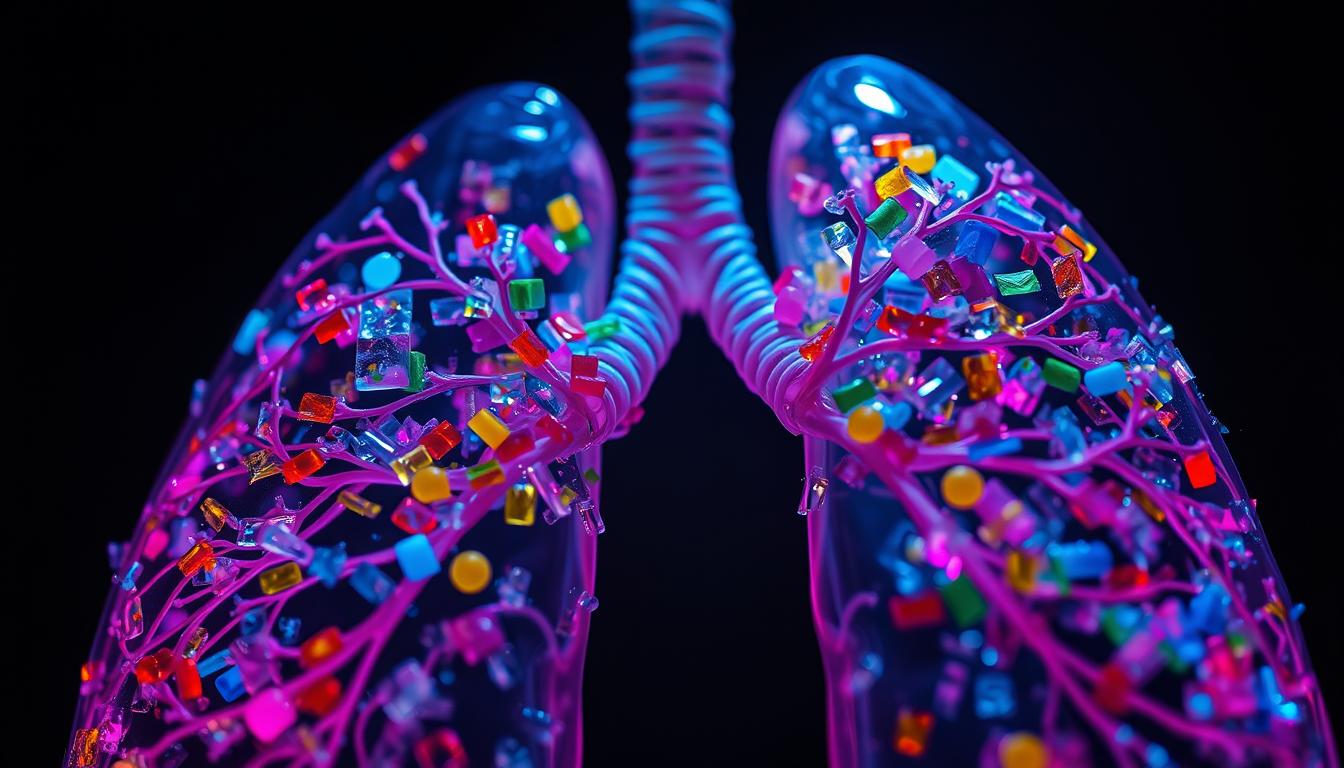
Plastic nanoparticles can get into your body in several ways. You might eat or drink things with them, or breathe them in. You can also touch them through your skin, like when using certain products6.
Some common ways plastic nanoparticles get into your body include:
- Ingestion: eating food and drinking water contaminated with plastic nanoparticles6
- Inhalation: inhaling particles in the air, which is more common indoors7
- Skin contact: using products with microplastics, like scrubs and toothpaste8
Knowing how plastic nanoparticles get into your body is key. It helps you avoid them and lower risks of health problems6.
Being mindful of how plastic nanoparticles enter your body helps. You can then take steps to lessen your exposure and the harm they might cause7.
| Exposure Route | Description |
|---|---|
| Ingestion | Eating food and drinking water contaminated with plastic nanoparticles6 |
| Inhalation | Inhaling particles in the air, which is more common indoors7 |
| Skin contact | Using products with microplastics, like scrubs and toothpaste8 |
The Connection Between Microplastics and Your Immune System
It’s important to know how microplastics affect our immune system. Studies show that microplastics can harm our immune function, causing inflammation. Our immune system fights off infections and diseases, but microplastics can interfere with this process.
Research found microplastics in foods like honey, beer, and fish9. This means we can get microplastics in our bodies by eating them. On average, we might eat 0.1 to 5 grams of microplastics each week10. This can build up in our bodies and harm our immune system.
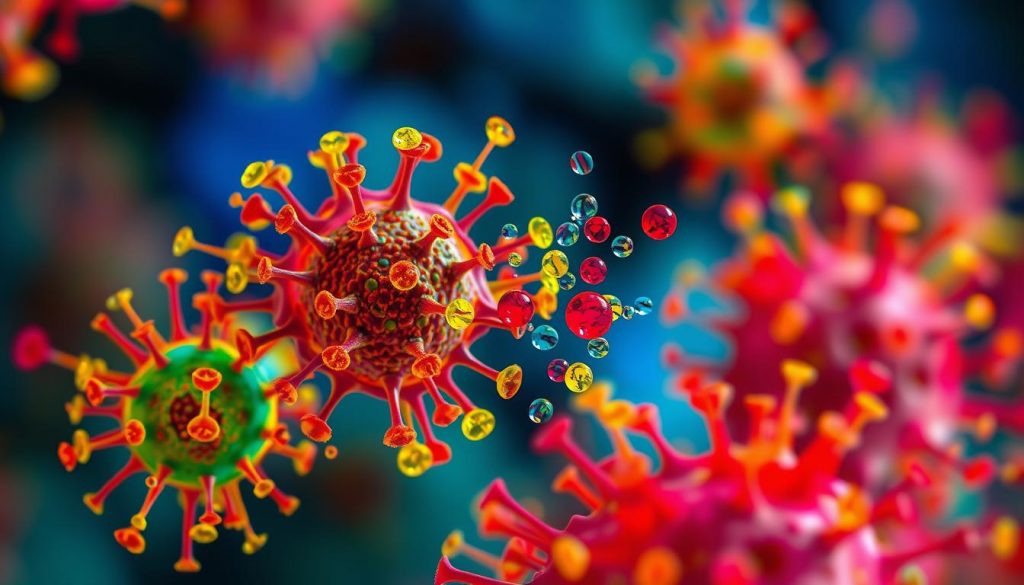
Some interesting facts about microplastics include:
* We produce about 270 million tons of plastic every year10
* Deep in the ocean, up to 2,000 microparticles per square meter have been found10
* Microplastics have been found in human blood, with levels reaching 1.6 μg/ml10
The relationship between microplastics and our immune system is complex. More research is needed to understand the full impact. But, the current evidence shows a clear link between microplastics and health problems, including immune system issues9.
Revolutionary Technology for Detecting Harmful Particles
The Bye Microplastics AI mobile app is a game-changer for spotting and cutting down on plastic nanoparticles. These particles can lead to autoimmune disorders. The app uses smart algorithms to find plastic nanoparticles in our surroundings. It tells users how to lower their exposure11.
Starting with the app is simple. You can get it from the App Store or Google Play. It’s made to be easy to use, with a clear interface. This makes it simple to understand and use the app12.
It’s vital to find and lessen our contact with plastic nanoparticles. They’re found in our drinking water, like rivers and lakes. This is a big worry for our health13. The Bye Microplastics AI app helps people manage their exposure. It’s a step towards preventing autoimmune disorders.
Here are some key features of the Bye Microplastics AI app:
- Detects plastic nanoparticles in the environment
- Provides information on how to reduce exposure
- Easy to use and navigate
- Available for download on App Store and Google Play
Prevention Strategies and Protective Measures
To lower the risk of an inflammatory response, it’s key to take steps to protect yourself. Start by using masks and gloves when dealing with products that might have microplastics14. Also, using water filters at home can cut down on microplastic exposure in drinking water15.
Being aware of the environment is also vital. You can help by using fewer products with microplastics and backing policies to fight plastic pollution15. These actions can help prevent autoimmune disorders and lower the risk of inflammation from microplastics.
The world’s plastic production is growing fast, with over 390 million tons made in 202215. This shows we need strong prevention and protection to tackle the dangers of microplastics and autoimmune disorders.
Shaping a Safer Future: Taking Action Against Plastic Pollution
The threat of plastic pollution is growing fast, with global production set to double in the next 20 years16. We all need to act together to make a safer, healthier world. Microplastics (MPs) and nanoplastics (NPs) are everywhere, with most coming from land16. They’re found in many places, including our oceans and even Arctic sea ice, harming aquatic life16.
By using fewer products with MPs and NPs, supporting laws to cut down plastic, and joining research, you can help fight this problem17. The health risks of microplastics, including links to autoimmune diseases, are worrying1617. If we work together, we can reduce plastic pollution and protect our environment and communities.
FAQ
What are the dangers of plastic nanoparticles?
How can the Bye Microplastics AI mobile app help?
Where can plastic nanoparticles be found?
What is the latest research on the effects of plastic nanoparticles?
What are the mechanisms of plastic nanoparticle cytotoxicity?
How do plastic nanoparticles enter the body?
What is the connection between microplastics and the immune system?
How can I reduce my exposure to plastic nanoparticles?
Source Links
- Potential toxicity of polystyrene microplastic particles – Scientific Reports
- Frontiers | Investigating nanoplastics toxicity using advanced stem cell-based intestinal and lung in vitro models
- Toxicological impact of microplastics and nanoplastics on humans: understanding the mechanistic aspect of the interaction
- Are Microplastics Toxic? A Review from Eco-Toxicity to Effects on the Gut Microbiota
- Uptake, Transport, and Toxicity of Pristine and Weathered Micro- and Nanoplastics in Human Placenta Cells
- Nanoplastics and Human Health: Hazard Identification and Biointerface
- The plastic brain: neurotoxicity of micro- and nanoplastics – Particle and Fibre Toxicology
- Impacts of micro and nanoplastics on human health – Bulletin of the National Research Centre
- Impact of Microplastics and Nanoplastics on Human Health
- Impacts of microplastics on immunity
- Harnessing Magnetic Nanoparticles for the Effective Removal of Micro- and Nanoplastics: A Critical Review
- Investigating nanoplastics toxicity using advanced stem cell-based intestinal and lung in vitro models
- Nanotechnology in Plastic Degradation – Biosciences Biotechnology Research Asia
- Nanoparticles‐induced potential toxicity on human health: Applications, toxicity mechanisms, and evaluation models
- Frontiers | Micro and nano plastics: contaminants in beverages and prevention strategies
- Micro- and Nano-Plastics Contaminants in the Environment: Sources, Fate, Toxicity, Detection, Remediation, and Sustainable Perspectives
- Coronas of micro/nano plastics: a key determinant in their risk assessments – Particle and Fibre Toxicology