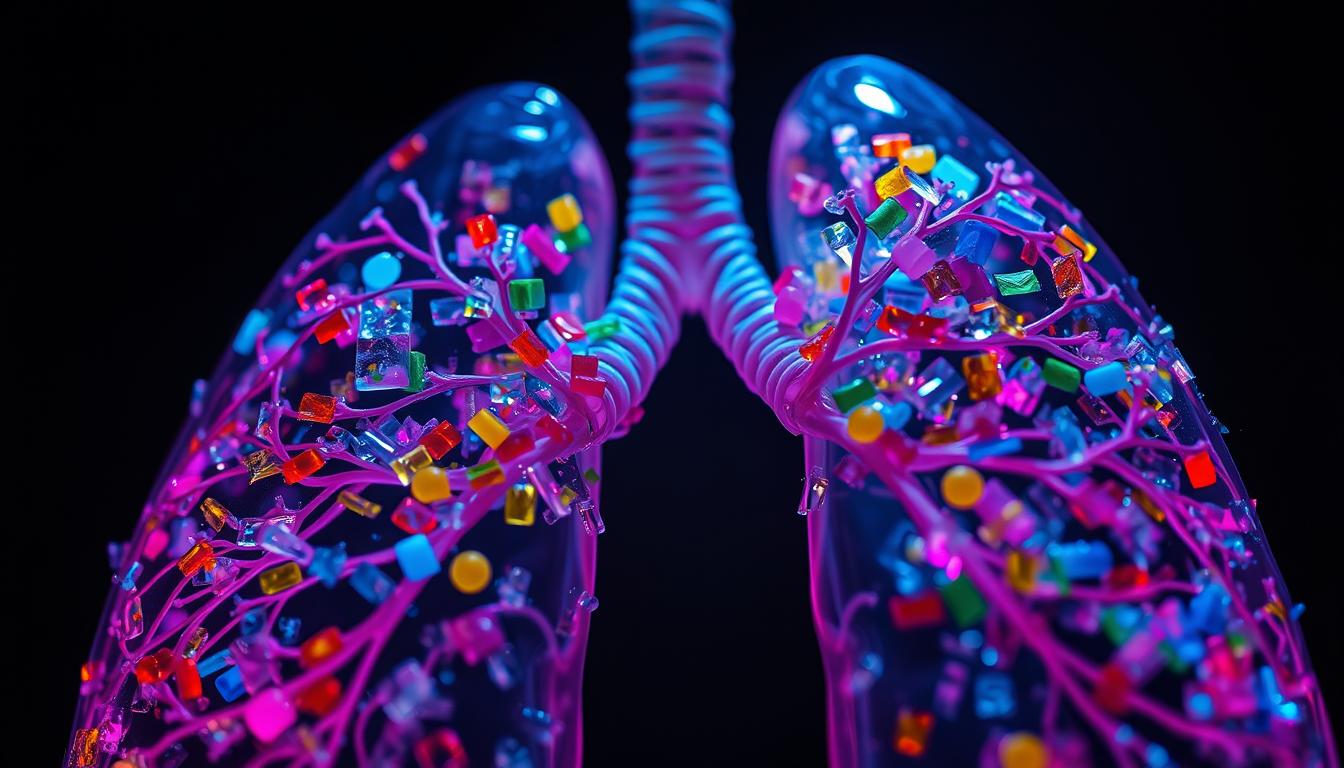
As you go about your daily life, you might not notice the microplastic pollution around you. It’s linked to plastic particles and lung inflammation. Today, we produce 460 million tonnes of plastic, which is 9% of all oil produced1. This pollution is a big worry, and knowing the health risks is key.
The World Health Organization says we might breathe in up to 3,000 microplastic particles a day1. This shows we need more research on how plastic affects our lungs. Tools like the Bye Microplastics AI mobile app can help track this pollution. They show how it affects our health, like lung inflammation.
Breaking Research: Plastic Particles and Lung Inflammation Connection Confirmed
Recent studies have found a link between plastic particles and lung inflammation. This shows how plastic particles can affect our health2. Microplastics have been found in the air that dolphins breathe, both in cities and rural areas. This means that plastic particles are everywhere in the air we breathe3.
The health risks of plastic particles are growing. Research shows they can cause damage to our cells and DNA. They can even lead to changes in our genes that might increase cancer risk2. Also, plastic particles have been found in our bodies, including blood, saliva, and even breast milk2.
Respiratory problems caused by plastic particles are a big worry. Studies show that plastic particles can make other harmful exposures worse2. Making and breaking down plastics also harm our environment by releasing harmful gases and particles2.
To understand the link between plastic particles and lung inflammation, we need to look at the latest research3. By doing this, we can learn more about the dangers of plastic particles. We can then take steps to reduce our exposure to them.
Understanding Microplastic Exposure in Your Daily Environment
Microplastic pollution is a big issue, and knowing how it affects us is key4. These tiny plastics are everywhere we go, from the air we breathe to the food we eat5. They can be as small as 1 nanometer to as big as 5 millimeters5. When we inhale them, the tiny ones can even reach deep into our lungs5.
Studies show that plastic production has skyrocketed, hitting 353 million tons in 20196. Experts warn that plastic waste will only get worse, with over a billion tons expected by 20606. To fight this, we can use air purifiers, choose products without plastic, and support groups that combat microplastic pollution.
Here are some ways microplastics can get into our lives:
- They can be in the air we breathe, making it easy to inhale them5
- They can also be in our drinking water, which is a big concern5
- And, they can be in the food we eat, including seafood and even salt6
We must act now to lessen our exposure to microplastics. By learning how they’re all around us, we can start making changes to protect our health and the planet4.
| Source | Microplastic Size | Exposure Route |
|---|---|---|
| Air | 1 nanometer to 5 millimeters | Inhalation |
| Water | 1 nanometer to 5 millimeters | Ingestion |
| Food | 1 nanometer to 5 millimeters | Ingestion |
How Plastic Particles Enter Your Respiratory System
Plastic particles can get into your lungs when you breathe them in. This is a big health risk7. They can cause lung inflammation, leading to long-term breathing problems8.
Plastic waste is a major source of airborne microplastics. It’s expected to increase by three times by 20408. Microplastics in the air can even form toxic gases when exposed to UV light7. These particles can travel far, even to places like Antarctica and Mount Everest8.
The size and type of microplastics affect how they accumulate in the lungs. Smaller particles might be more harmful7. People with lung conditions like asthma or COPD are at higher risk7.
- They’ve been found in human placental tissue, blood, and breast milk7.
- Workers exposed to plastic fibers may face lung issues8.
- The United Nations Environment Assembly has over 190 nations working together to stop plastic pollution8.
The Inflammatory Response: Your Body’s Reaction to Plastic Particles
When plastic particles enter your body, they can cause an inflammatory response. This leads to lung inflammation and other respiratory issues. Research shows that polypropylene (PP) microparticles increase inflammatory cytokines and chemokines, like TNF-α and IL-1β9.
This can result in lung injuries. These injuries are characterized by inflammatory cell infiltration. The number of cells, including macrophages and lymphocytes, increases in bronchoalveolar lavage fluid (BALF)9.
The effects of microplastics on human health are a growing concern. Studies indicate that humans consume about 1.42 × 10^5 to 1.54 × 10^5 microplastic particles annually10. Shellfish can lead to the consumption of up to 11,000 plastic particles per year10.
Airborne microplastics could lead to the ingestion of 13,731 to 68,415 particles per year10. Microplastics have been found in human tissues, including placenta, lungs, liver, sputum, breast milk, feces, urine, and blood10.
Here are some key findings related to microplastics and lung inflammation:
- Polypropylene (PP) microparticles can cause an inflammatory response in the body9.
- Microplastics have been detected in human stool, with 62.8% of identified microplastics being polypropylene (PP)11.
- Respiratory exposure to microplastics is a documented route, though specific rates or quantities are not detailed10.
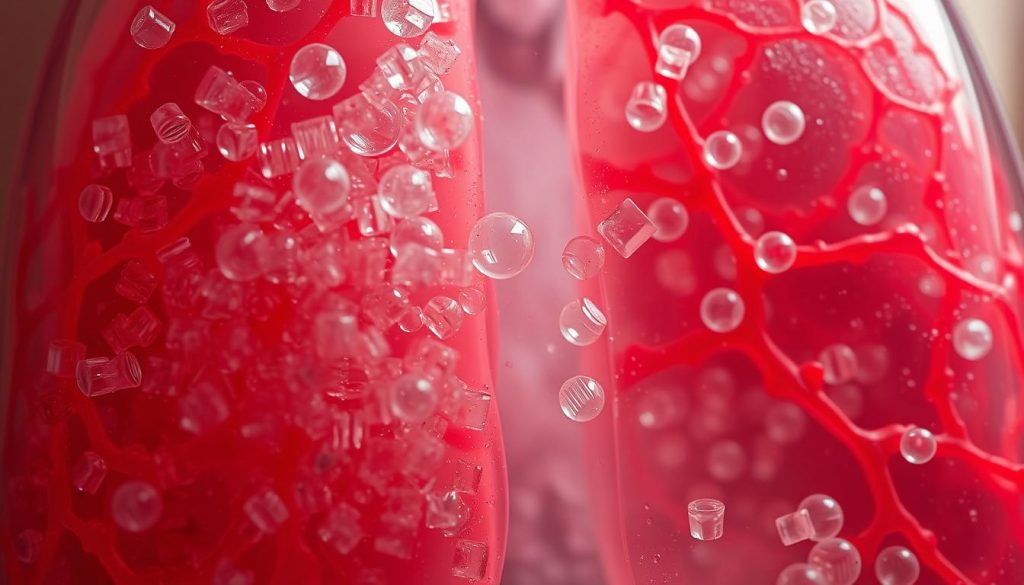
It is essential to understand the impact of plastic particles on human health. This includes lung inflammation and respiratory issues from plastic particles. Further research is needed to fully comprehend the effects of microplastics on human health91110.
| Microplastic Type | Percentage in Human Stool |
|---|---|
| Polypropylene (PP) | 62.8% |
| Polyethylene terephthalate (PET) | 17.0% |
Identifying Risk Factors and Vulnerable Populations
Microplastic pollution is a big worry, and knowing its health impacts is key. You can get exposed to microplastics in many ways, like breathing them in, eating them, or touching them. The harm caused by plastic particles can be serious, so it’s important to find out who’s most at risk.
Studies say we might swallow about 5 grams of plastic every week12. This can cause health issues like inflammatory bowel disease and breathing problems. Groups like kids, women, and those who are less powerful are more likely to face this problem12.
Where you live also matters. Air pollution from microplastics is much worse than in other places13. Plus, as we get older, our lungs can hold more microfibers, making things worse13.
People with health issues face even bigger dangers. Microplastics in our bodies can make asthma and COPD worse14. We need to act fast to cut down on microplastic pollution and protect our health.
Prevention Strategies: Reducing Your Exposure to Airborne Plastics
To lower the risks of breathing in plastic particles, it’s key to use prevention strategies. Using home filters can help remove microplastics from the air. This reduces the amount of plastic we breathe in15.
Wearing masks is another way to protect ourselves. Studies show that cars can kick up a lot of road debris, which includes microplastics. By wearing masks, we can lower our chances of breathing in these harmful particles16.
Some important steps to take include:
- Using air purifiers to remove microplastics from the air
- Wearing masks when outdoors to reduce inhalation of airborne plastics
- Avoiding areas with high levels of air pollution
By following these steps, we can lower our exposure to airborne plastics. This helps prevent lung inflammation and other health problems15.
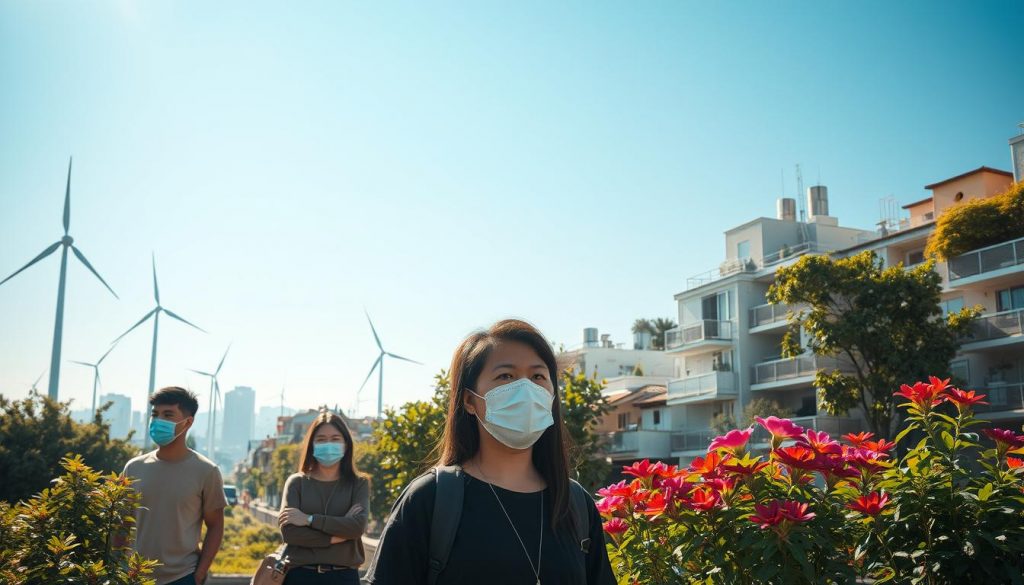
It’s vital to reduce our exposure to airborne plastics to prevent health issues. By being proactive, we can protect our health and help reduce plastic pollution16.
| Prevention Strategy | Effectiveness |
|---|---|
| Home Filtration Solutions | Highly Effective |
| Personal Protection Methods | Effective |
| Avoiding Areas with High Air Pollution | Moderately Effective |
Monitoring Tools and Technologies for Plastic Particle Detection
Microplastic pollution is a big problem, and finding plastic particles is key to knowing how they affect us and the planet. Studies have found that all air samples had microplastics, with amounts from 1.7 to 16.2 particles per cubic meter17. To keep track of this pollution, new tools and technologies are being made, like the Bye Microplastics AI mobile app.
These monitoring tools have important features:
- They find microplastics in air and water samples
- They analyze what the microplastics are made of and how big they are
- They help track where microplastic pollution is happening
About 71% of plastic waste ends up in the environment, with some being reused18. This shows we really need good monitoring tools to follow microplastic pollution. We must understand its effects on our health and the planet.
With these tools, we can learn more about microplastic pollution. We can then work to lessen our exposure to it. This will help reduce the health effects of plastic particles.
Taking Action: Your Role in Reducing Plastic Particle Pollution
You have the power to fight plastic particle pollution and protect lung health19. With plastic production set to soar by 2050, it’s key to cut our plastic use19.
Start by downloading the Bye Microplastics AI app. It lets you track microplastics in your area, helping you make better choices19. Joining this effort can help prevent lung problems and other health issues from pollution19.
Every small action you take can greatly benefit your health and the planet. Together, we can tackle this growing problem effectively.
FAQ
What are the health risks of microplastics and lung inflammation?
How are microplastics present in our daily environment?
How do plastic particles enter the respiratory system?
What are the inflammatory responses associated with plastic particle inhalation?
Who are the most vulnerable populations to microplastic pollution?
How can I reduce my exposure to airborne plastics?
What tools are available for monitoring microplastic pollution?
Source Links
- Microplastic and plastic pollution: impact on respiratory disease and health
- Microplastics Everywhere
- Researchers detect microplastics in exhaled air of bottlenose dolphins
- Health Effects of Microplastic Exposures: Current Issues and Perspectives in South Korea
- Scientists know our bodies are full of microplastics. What are they doing to us?
- Microplastics are everywhere — we need to understand how they affect human health – Nature Medicine
- Effect of microplastics deposition on human lung airways: A review with computational benefits and challenges
- How Plastic Waste is Hurting Your Health
- Polypropylene nanoplastic exposure leads to lung inflammation through p38-mediated NF-κB pathway due to mitochondrial damage
- Microplastics in the Human Body: Exposure, Detection, and Risk of Carcinogenesis: A State-of-the-Art Review
- Microplastics: an often-overlooked issue in the transition from chronic inflammation to cancer – Journal of Translational Medicine
- Plastics and Human Health | Plastics and the Environment Series
- An emerging role of microplastics in the etiology of lung ground glass nodules – Environmental Sciences Europe
- Airborne micro- and nanoplastics: emerging causes of respiratory diseases – Particle and Fibre Toxicology
- Breathing Plastic: The Health Impacts of Invisible Plastics in the Air – Center for International Environmental Law
- 5 Ways To Reduce Your Microplastics Exposure In The ‘Plasticene’ Era
- Simulating human exposure to indoor airborne microplastics using a Breathing Thermal Manikin – Scientific Reports
- Detection and removal of microplastics in wastewater: evolution and impact
- Airborne Microplastics Linked to Lung and Colon Cancers