Thinking about how microplastics affect your health is key. It’s important to know how they might harm your gut health, like causing inflammation. Studies say we might eat up to 5 grams of microplastics each week1.
This can mess with the good bacteria in our guts, leading to problems like IBD and infections1. Microplastics can upset the balance of our gut microbiome. This imbalance is linked to inflammation1.
It’s vital to cut down on microplastic exposure. Using apps like Bye Microplastics AI can help you make better choices. The world produced 359 million metric tons of plastics in 20182.
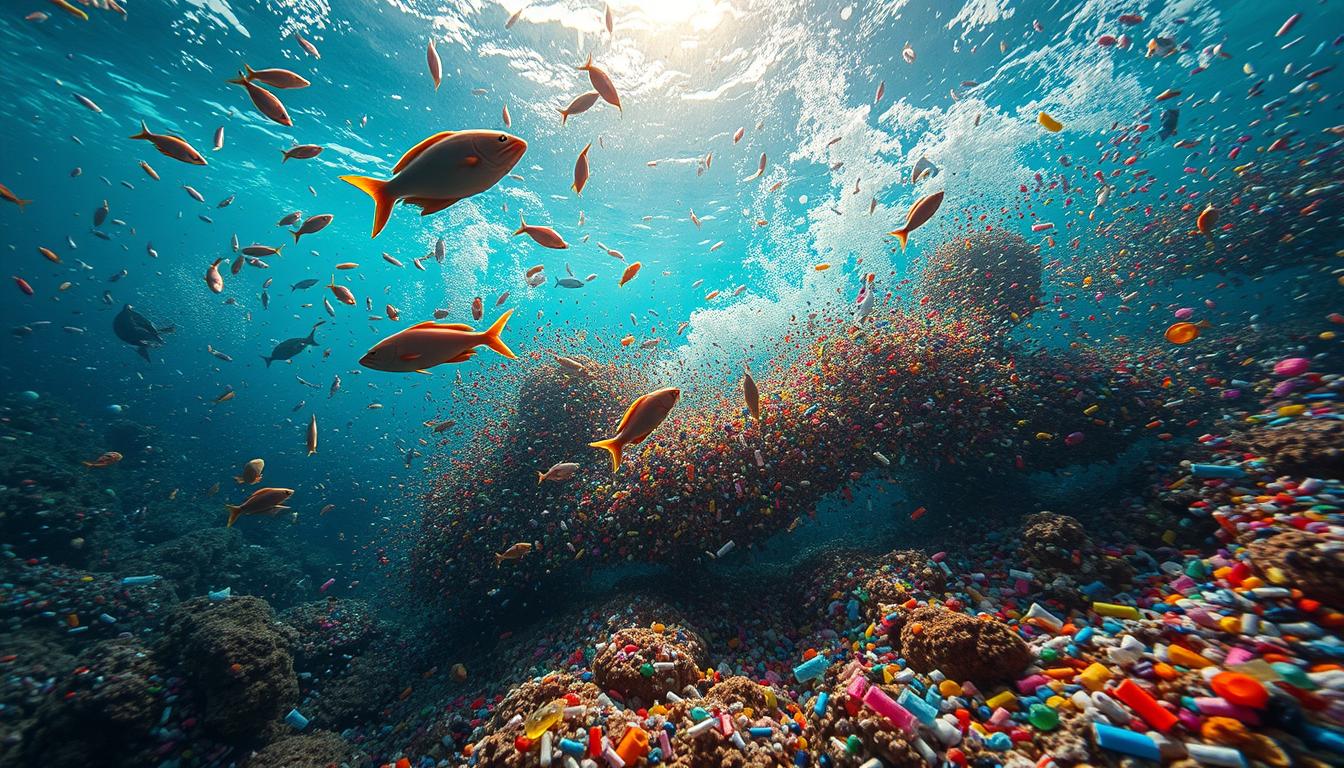
Every year, 4.8 to 12.7 million metric tons of plastic waste enter our oceans2. This shows we need to tackle microplastic issues to protect our health.
Knowing how microplastics affect our guts is essential. It helps us avoid diseases linked to them, like IBD3. By understanding where microplastics come from and reducing our intake, we can keep our guts healthy.
Recent Studies Reveal Alarming Links Between Microplastics and Gut Health
Exploring microplastics shows their harm to human health is a big worry. Studies have found links between microplastics and gut health4. People with inflammatory bowel disease have 50% more microplastics in their faeces. Those with more severe IBD have even higher levels4.
Microplastics can cause chronic inflammation and harm health in many ways4. They build up in the gut, mainly through what we eat and breathe5. Knowing how microplastics affect the digestive system is key to reducing risks.
Some important findings on microplastics and health include:
- Microplastics are found in human stool and urine, showing they leave the body through natural processes4
- They can pass through the gut lining, with size and shape affecting this4
- The immune system has trouble removing them, leading to long-term immune responses4
Understanding microplastics is vital as we face this global issue. Knowing how they affect our health, like the digestive system, helps us protect ourselves5.
Understanding Microplastics and Gastrointestinal Inflammation
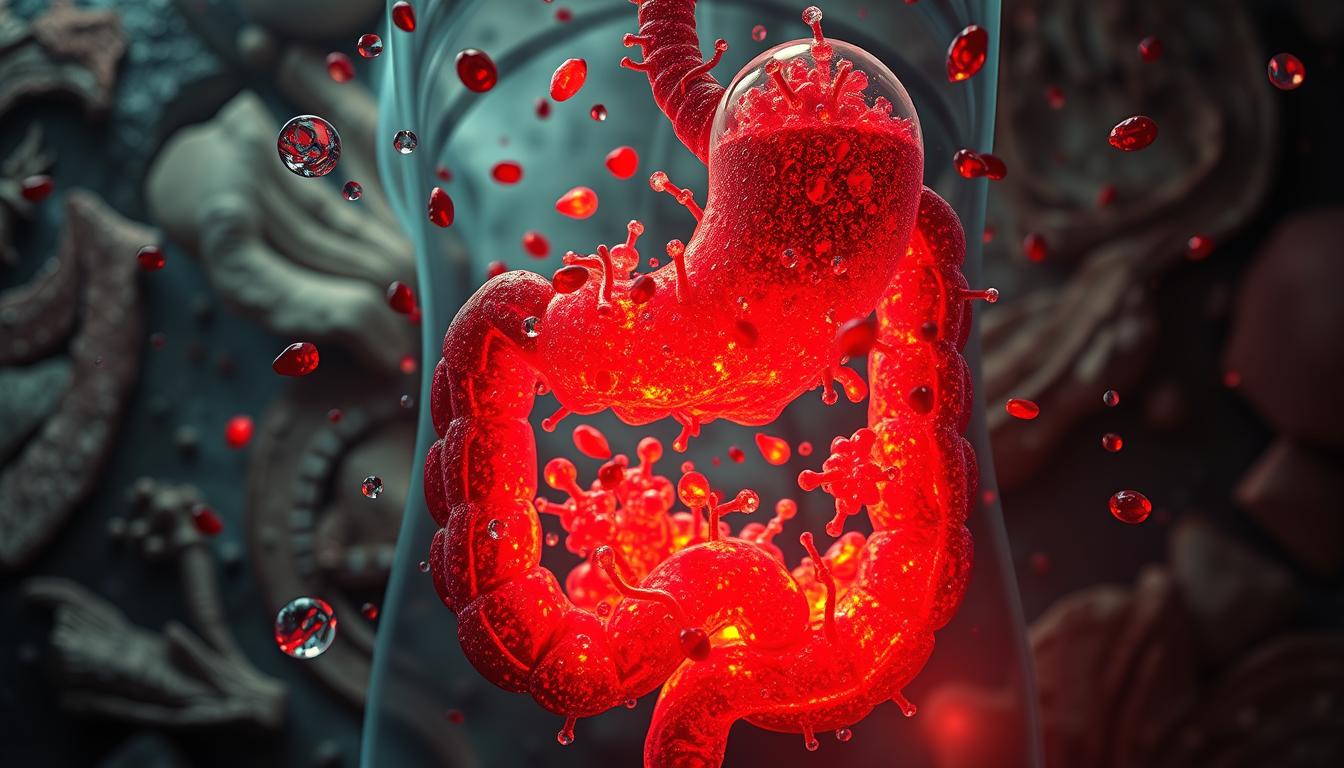
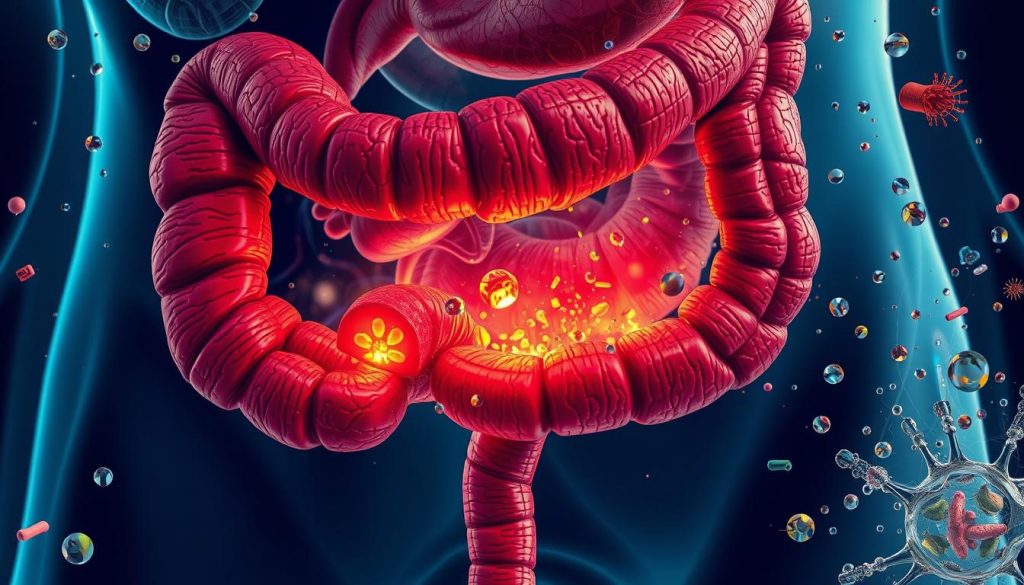
Microplastics in our gut can cause inflammation, affecting our health. Research shows they can disrupt the balance in our intestines and damage the gut’s lining1. This damage can lead to serious health issues. Studies found that microplastics can also harm the diversity of gut bacteria1.
People with inflammatory bowel disease (IBD) have more microplastics in their stool than healthy individuals6. The severity of diseases like ulcerative colitis and Crohn’s disease is linked to microplastic levels in feces6. The world produces over 300 million tons of plastic yearly. By 2050, landfills and nature will hold 13.2 billion tons of plastic waste7.
The exact ways microplastics cause gut inflammation are not fully understood. But, research points to possible causes like infections, lipid buildup, and energy metabolism issues7. The main types of bacteria in our gut affected by microplastics are Firmicutes, Bacteroidetes, Actinobacteria, and Proteobacteria1. More research is needed to grasp the full impact of microplastics on our health and find ways to reduce exposure.
| Source | Findings |
|---|---|
| 6 | Correlation between microplastics and IBD severity |
| 7 | Global plastic manufacturing and waste projections |
| 1 | Impact of microplastics on gut microbiome and human health |
How Microplastics Enter Your Digestive System
Microplastics can get into your body through food, drinks, and even the air you breathe. A 2021 study found that people might eat over 900 microplastic particles daily. Kids might eat more than 500 specks a day8. These tiny plastics are less than 5 millimeters long and can carry harmful toxins into your body8.
Some common ways you might get exposed to microplastics include:
- Drinking water, which may contain microplastics, with bottled water containing about twice as many microplastics as tap water8
- Food, such as milk and other products that may contain microplastics8
- Air, which can also contain microplastics that you may inhale8
People eat about 5 grams of microplastic particles each week. That’s as heavy as a credit card9. This can cause damage and change how your body works9. It’s important to know about these risks and try to avoid them.
| Source | Microplastic Content |
|---|---|
| Drinking water | Microplastics present, with bottled water containing more than tap water8 |
| Food | Microplastics found in milk and other products8 |
| Air | Microplastics present, potentially inhaled8 |
The Impact of Microplastics on Your Digestive Health
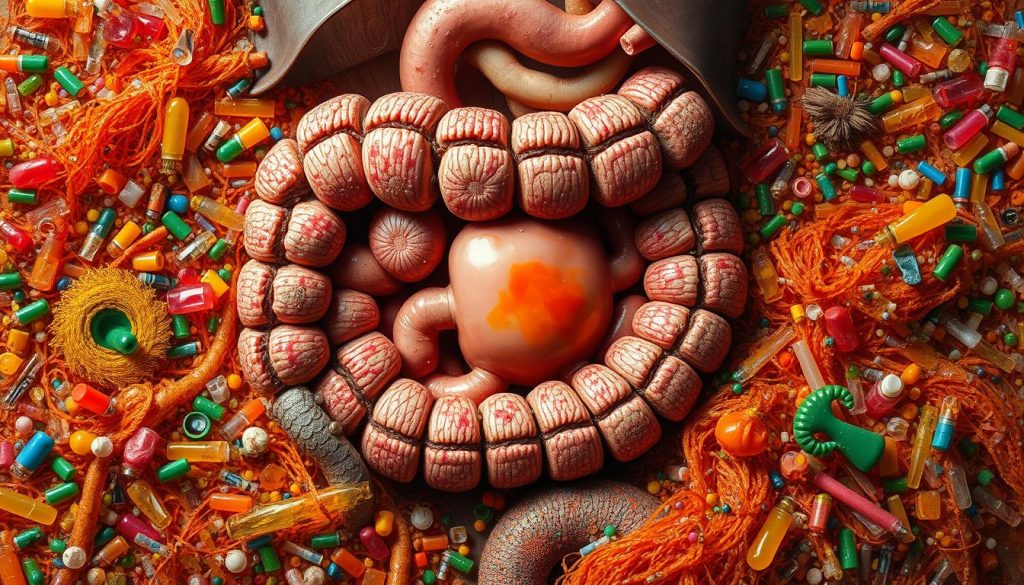
Microplastics can harm your gut health, studies show. They can change how your intestine works and affect digestion10. This is a big worry because it can mess with the good bacteria in your gut. It might even cause long-term health problems.
Research also links microplastics to more inflammation. This can lead to serious diseases like ulcerative colitis and Crohn’s disease11.
Here are some ways microplastics can hurt your digestive health:
- They can change the balance of good bacteria in your gut, affecting how you digest food10
- They can make your intestine more open, letting toxins into your blood10
- They can cause inflammation, leading to chronic diseases11
It’s important to know how microplastics can harm your gut health. We should try to avoid them as much as we can. By choosing the right products and foods, we can lower the risk of harm from microplastics. This helps keep our digestive system healthy11.
| Source | Findings |
|---|---|
| Link 1 | Microplastics can alter the function of macrophages, causing them to release inflammatory molecules11 |
| Link 2 | Microplastics can increase the permeability of the intestine and affect digestion10 |
Reducing Your Exposure to Harmful Microplastics
To lower the risks from microplastics, it’s key to cut down on exposure. Studies show12 that people in the U.S. might eat over 50,000 microplastic particles a year. This shows we need to act now to lessen our exposure.
There are smart ways to fight microplastics. For example, the Bye Microplastics AI app can spot products with microplastics. Simple habits can also help a lot:
- Avoiding contaminated food and beverages
- Using glass or stainless steel instead of plastic
- Filtering tap water with a certified system
- Choosing not to use single-use plastics
By doing these things, we can lower our microplastic intake. This helps protect our health from issues like gut inflammation13. It also helps the planet by reducing plastic pollution, a big problem14.
It’s important to remember that fighting microplastics is a team effort. We can all help by making smart choices and living sustainably. Together, we can make our environment safer for everyone12.
| Strategy | Benefits |
|---|---|
| Using the Bye Microplastics AI mobile app | Helps identify products containing microplastics |
| Avoiding contaminated food and beverages | Reduces microplastics exposure |
| Using alternative products | Minimizes plastic leaching into food and beverages |
Taking Control of Your Digestive Health in a Plastic-Filled World
The world is facing a huge problem with15 microplastics. It’s important to protect your digestive health. These plastic particles can cause inflammation and upset your gut’s balance16. People eat about 5 grams of microplastics each week, which is like a credit card17.
The health risks of microplastics are serious. They might lead to chronic diseases like obesity and autoimmune disorders. They can also mess with your gut-brain connection16. It’s time to act and find ways to reduce your exposure.
Choosing whole foods and filtered water can help lower your intake of harmful particles15. Eating a variety of fiber-rich foods and exercising regularly can also boost your gut health17. Your health is in your hands. By taking action, you can stay healthy in a world filled with plastics.
FAQ
What is the connection between microplastics and gastrointestinal inflammation?
What are the latest research findings on the impact of microplastics on gut health?
How do microplastics induce gastrointestinal inflammation?
How do microplastics enter the digestive system?
What are the long-term health consequences of microplastic exposure in the digestive system?
How can I reduce my exposure to harmful microplastics?
Source Links
- Mind over Microplastics: Exploring Microplastic-Induced Gut Disruption and Gut-Brain-Axis Consequences
- Immunotoxicity and intestinal effects of nano- and microplastics: a review of the literature – Particle and Fibre Toxicology
- Microplastics may be linked to inflammatory bowel disease, study finds
- Our bodies are full of microplastics, but what are they doing to us? Scientists are searching for answers
- Micro(nano)plastics and Their Potential Impact on Human Gut Health: A Narrative Review
- IBD and microplastics: What is the link?
- Exposure to polyethylene microplastics exacerbate inflammatory bowel disease tightly associated with intestinal gut microflora
- You eat over 900 tiny pieces of plastic a day and researchers don’t fully know what it’s doing to your health yet
- Study reveals microplastics’ significant impact on digestive pathways
- How do microplastics impact our gut health?
- Microplastics Make Their Way from the Gut to Other Organs, UNM Researchers Find
- Microplastics in food: Health risks and solutions
- Microplastics Everywhere
- 5 Tips to Avoid Microplastics and Reduce Your Family’s Exposure
- Do microplastics affect gut health? – Throne Science
- Microplastics and human health: unveiling the gut microbiome disruption and chronic disease risks
- Microplastics make their way from the gut to other organs