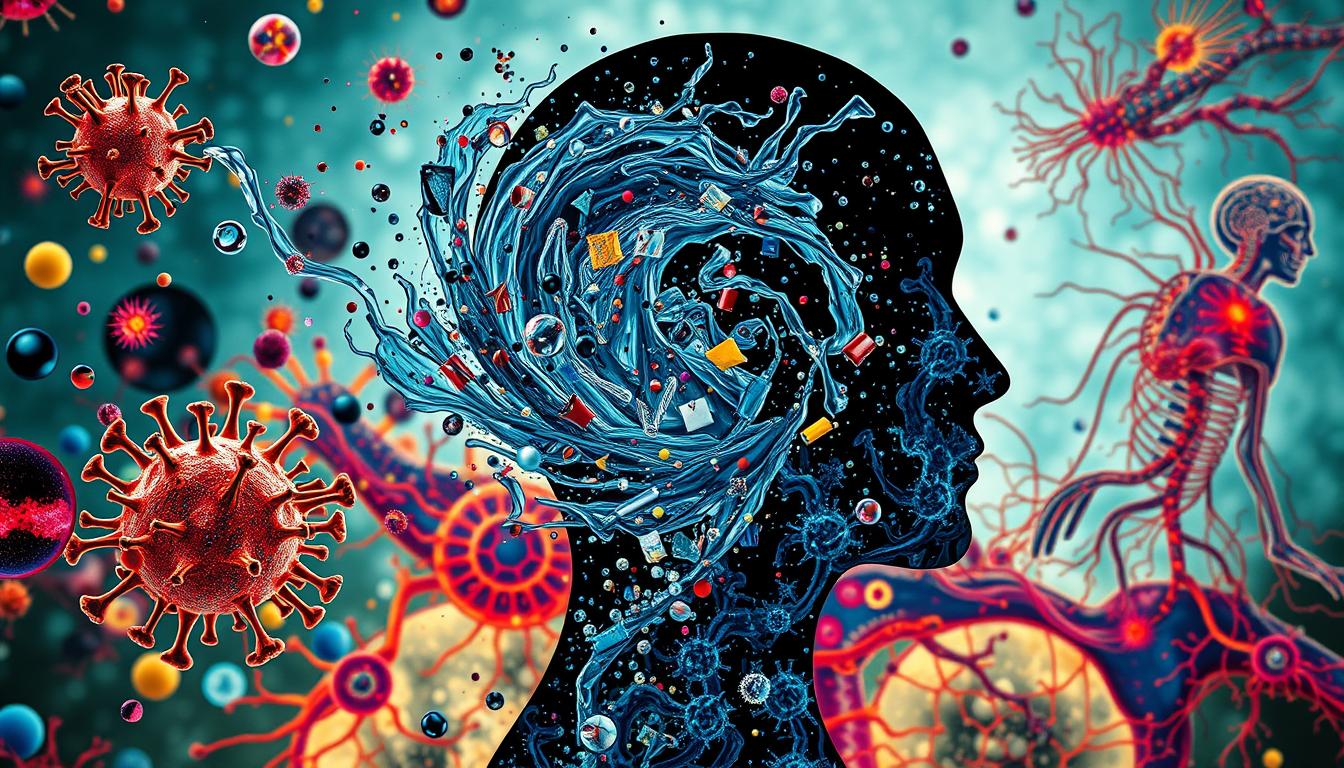
When thinking about microplastics and your health, it’s key to know the risks. These risks include microplastics and cancer, as well as health problems from plastic pollution. Microplastics are tiny, smaller than 5 mm1. Studies show that certain types of microplastics don’t harm cells1.
But, you can lower your exposure to microplastics. Tools like the Bye Microplastics AI app can guide you. It’s on the App Store and Google Play. The app offers info on microplastics and cancer, plus tips to reduce plastic pollution.
Research is ongoing about microplastics and human health. Some studies suggest they might raise lung cancer risk2. The World Health Organization wants more research on this topic. Knowing the risks helps you protect your health and reduce microplastic exposure.
People worldwide have shared their views on microplastics through online surveys. Their concerns vary3.
The Growing Concern: Microplastics and Cancer Risk
Research is showing that microplastics might be linked to cancer4. They can cause oxidative damage and DNA damage, which are cancer risks4. Doctors are learning more about how plastic pollution affects our health.
Microplastics are thought to harm our health in many ways5. They have been found in our bodies, including blood and lungs5. Adults might eat about 2,000 microplastics a year through salt6.
The World Health Organization (WHO) says there’s not much evidence yet6. But, more research is needed to understand the risks6. We must keep studying to know how microplastics affect us.
- Microplastics have been found in various sources, including tap water, bottled water, and beverages such as beer6.
- Exposure to microplastics is suspected to be a reproductive hazard supported by 2 human studies and 11 animal studies evaluating 10 outcomes related to hormone levels, ovarian follicles, and sperm/testicular damage5.
- A total of over 2,800 studies were reviewed to identify relevant research on microplastics’ health effects, resulting in the inclusion of 28 rodent studies and 3 human studies5.
How Microplastics Enter Your Body
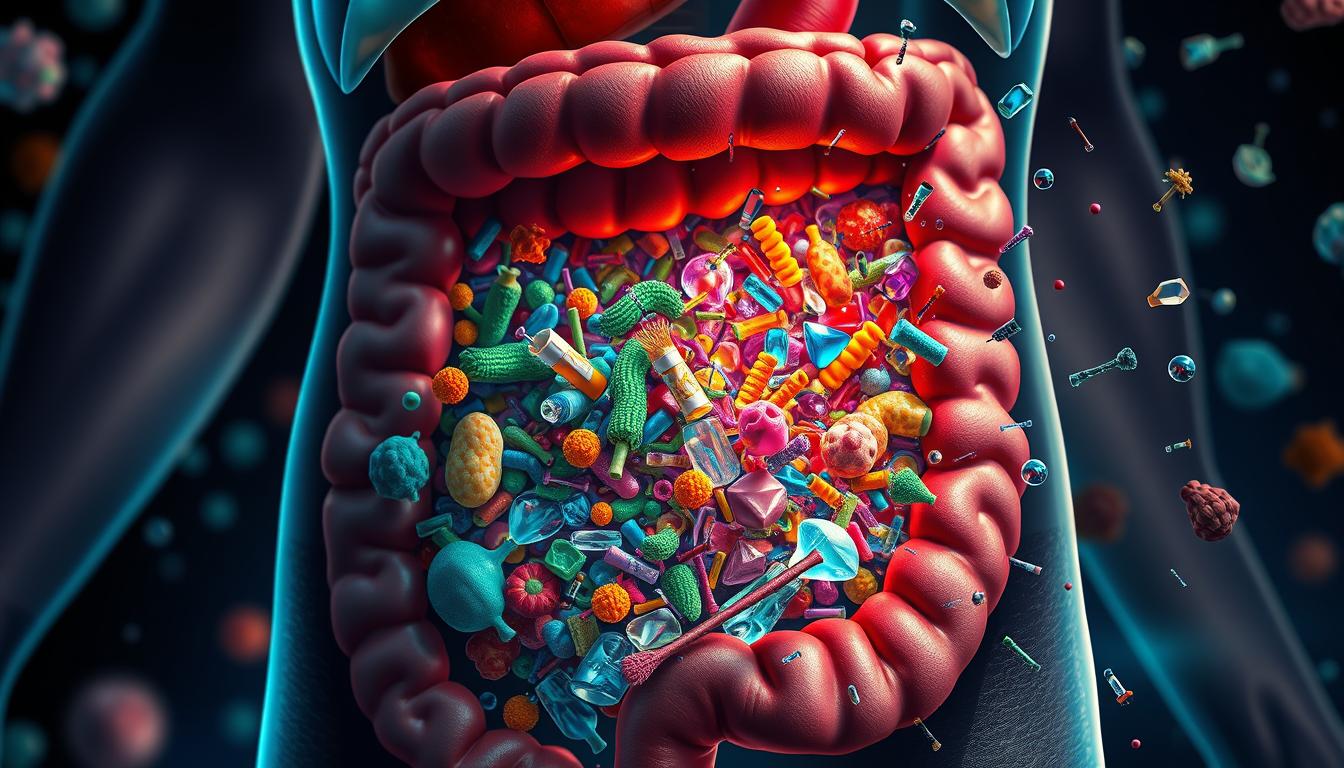
Microplastics can get into your body in many ways. This includes food, water, and air pollution, all seen as environmental health hazards7. Eating or drinking things with microplastics can expose you to Cancer-causing agents8. Also, products like cosmetics and cleaning items can add to your exposure9.
Here are some ways microplastics can get into your body:
- Eating or drinking things with microplastics
- Breathing in microplastic particles in the air
- Soaking through the skin, mainly from personal care products with microplastics
Knowing these sources helps you lower your exposure to microplastics. This can help prevent health issues, like cancer7.
Understanding how microplastics get into your body helps you reduce exposure. This way, you can lessen the risks from these environmental health hazards and Cancer-causing agents89.
Understanding the Cancer Connection
Microplastics are a growing concern, linked to a higher risk of cancer10. They contain harmful chemicals like BPA and phthalates. These can harm our health and increase cancer risk11.
The impact of plastic waste on health is complex. It involves the chemicals in microplastics, how they affect cells, and long-term exposure. Research shows microplastics can damage cells, DNA, and change gene activity, all cancer risks11. They’ve also been found in breast milk and meconium, showing the need for more research11.
Chemical Composition of Microplastics
Microplastics can carry heavy metals and POPs, harming our health11. The chemicals in them depend on the plastic type. It’s key to study how different plastics affect us.
Cellular Impact and Inflammation
Microplastics can cause cell inflammation and oxidative stress. This can lead to cell damage and higher cancer risk11. Understanding how microplastics interact with cells is critical for health research.
| Microplastic Type | Chemical Composition | Potential Health Effects |
|---|---|---|
| Polyethylene | BPA, phthalates | Endocrine disruption, cancer |
| Polypropylene | Heavy metals, POPs | Neurotoxicity, cancer |
The effects of microplastics on health are complex and need more study. By learning about their chemicals and health impacts, we can reduce exposure. This helps lower the risks of microplastic consumption10.
Sources of Microplastic Exposure in Your Daily Life
Every day, you’re exposed to microplastics in food, water, and air. These Environmental toxins12 come from various sources. You might find microplastics in cosmetics and cleaning products too13. On average, people eat between 39,000 and 52,000 microplastic particles each year. This number goes up to about 74,000 when you include the ones you breathe in12.
Microplastics are found in many foods like dairy, meat, fish, salt, and honey12. Drinking tap water adds about 4,000 microplastic particles to your yearly intake. Bottled water in plastic adds another 9,00012. Plastic pollution is estimated to cost over $250 billion worldwide13.
To cut down on microplastic exposure, try using less plastic. Use reusable bags and avoid products with microbeads. Choose items with minimal packaging. These changes can help lower your intake of Environmental toxins and microplastics ingestion12.
| Source of Microplastic Exposure | Estimated Annual Intake |
|---|---|
| Food | 39,000 – 52,000 particles |
| Inhaled Microplastics | Up to 74,000 particles |
| Tap Water | 4,000 particles |
| Bottled Water | 9,000 particles |
Health Implications Beyond Cancer
When thinking about microplastics and health, don’t just focus on cancer. They can also affect your immune system. Research shows they can cause inflammation and oxidative stress14. This can lead to various health issues, from minor skin problems to serious immune suppression.
Microplastics can also harm your organs. Studies have found they can build up in the liver, kidneys, and lungs15. This can cause damage and disrupt normal organ function. It may even lead to organ failure or reproductive health issues.
Reproductive health is another big concern with microplastics. Exposure can change reproductive hormones and damage reproductive organs16. This can affect fertility and overall reproductive health. To lower your risk, it’s key to reduce exposure to these harmful agents.
- Avoid single-use plastics and use reusable items instead
- Choose products with less packaging or biodegradable materials
- Filter your water to remove microplastics and other contaminants
By following these tips, you can lessen your exposure to microplastics. This reduces the risk of health problems beyond cancer. These include immune system issues, organ damage, and reproductive health problems caused by harmful agents.
Reducing Your Exposure to Microplastics
To cut down on microplastics exposure, taking simple steps is key. Vacuuming with a HEPA filter can help remove dust, which carries microplastics and chemicals17. Also, choose products wisely, as some packaging may contain harmful substances like BPA17.
Technology, like the Bye Microplastics AI app, offers personalized advice to lower your exposure18. It helps you make better choices about what you buy and how it affects your health18. Making lifestyle changes, like using less packaging and avoiding single-use plastics, also helps19.
Here are some easy ways to reduce exposure:
- Avoid heated plastic containers to prevent micro- and nanoparticles release19
- Opt for products with recycling codes that are safer, like those without phthalates or styrene18
- Regular vacuuming and dusting to keep your space clean of microplastics17
By following these tips and being aware of the risks, you can lower your exposure to microplastics. This helps keep you and the environment healthier171819.
Taking Action for a Healthier Future
The problem of microplastics in our environment is serious. They might be linked to cancer and other health issues20. By taking steps to lower your exposure to microplastics, you help make the future healthier. This action also reduces the dangers of this growing environmental problem21.
To start, try to use fewer single-use plastics. Pick personal care items without microbeads. Also, make sure to throw away plastic waste correctly22. Supporting laws and local projects that fight plastic pollution is also important. This helps find better, greener solutions22.
Dealing with microplastics is a team effort. By choosing wisely and pushing for change, you’re key to a cleaner, healthier world20. Together, we can make big steps towards a safer future. One where the dangers of microplastics and cancer prevention are less of a worry21.
FAQ
What are microplastics, and how do they relate to cancer risk?
What are the latest research findings on the connection between microplastics and cancer?
How do microplastics enter the human body?
What is the potentially link between the chemical composition of microplastics and cancer?
What are the common sources of microplastic exposure in daily life?
What are the broader health implications of microplastics beyond cancer?
How can I reduce my exposure to microplastics?
Source Links
- Polypropylene microplastics promote metastatic features in human breast cancer – Scientific Reports
- Two studies associate microplastic exposure with cancer | Food Packaging Forum
- Uncertainty about the risks associated with microplastics among lay and topic-experienced respondents – Scientific Reports
- Microplastics – A Growing Concern as Carcinogens in Cancer Etiology: Emphasis on Biochemical and Molecular Mechanisms – Cell Biochemistry and Biophysics
- New Review Highlights Human Health Risks from Microplastic Exposure
- Microplastics on Human Health: How much do they harm us?
- I’m a Microplastics Researcher. Here’s How To Limit Their Dangers
- Health Effects of Microplastic Exposures: Current Issues and Perspectives in South Korea
- Microplastics and the human health impact | Breast Cancer UK
- Could Microplastics Be a Driver for Early Onset Colorectal Cancer?
- Microplastics Everywhere
- Microplastics: A Real Global Threat for Environment and Food Safety: A State of the Art Review
- Plastics and Human Health | Plastics and the Environment Series
- Microplastics in the Human Body: Exposure, Detection, and Risk of Carcinogenesis: A State-of-the-Art Review
- A Detailed Review Study on Potential Effects of Microplastics and Additives of Concern on Human Health
- Microplastics a growing challenge to health and the environment | Harvard T.H. Chan School of Public Health
- Microplastics can be found in many of your body’s organs and tissues. What you can do about it | CNN
- Microplastics: Minimizing Exposure to An Invisible Health Threat
- ‘They’re in the air, drinking water, dust, food …’ How to reduce your exposure to microplastics
- 2024.11.25 Microplastics Monitoring Petition_final
- Stopping our Plastics Disaster | Breast Cancer Action Québec
- Michigan Leaders Are Taking Action on Microplastics