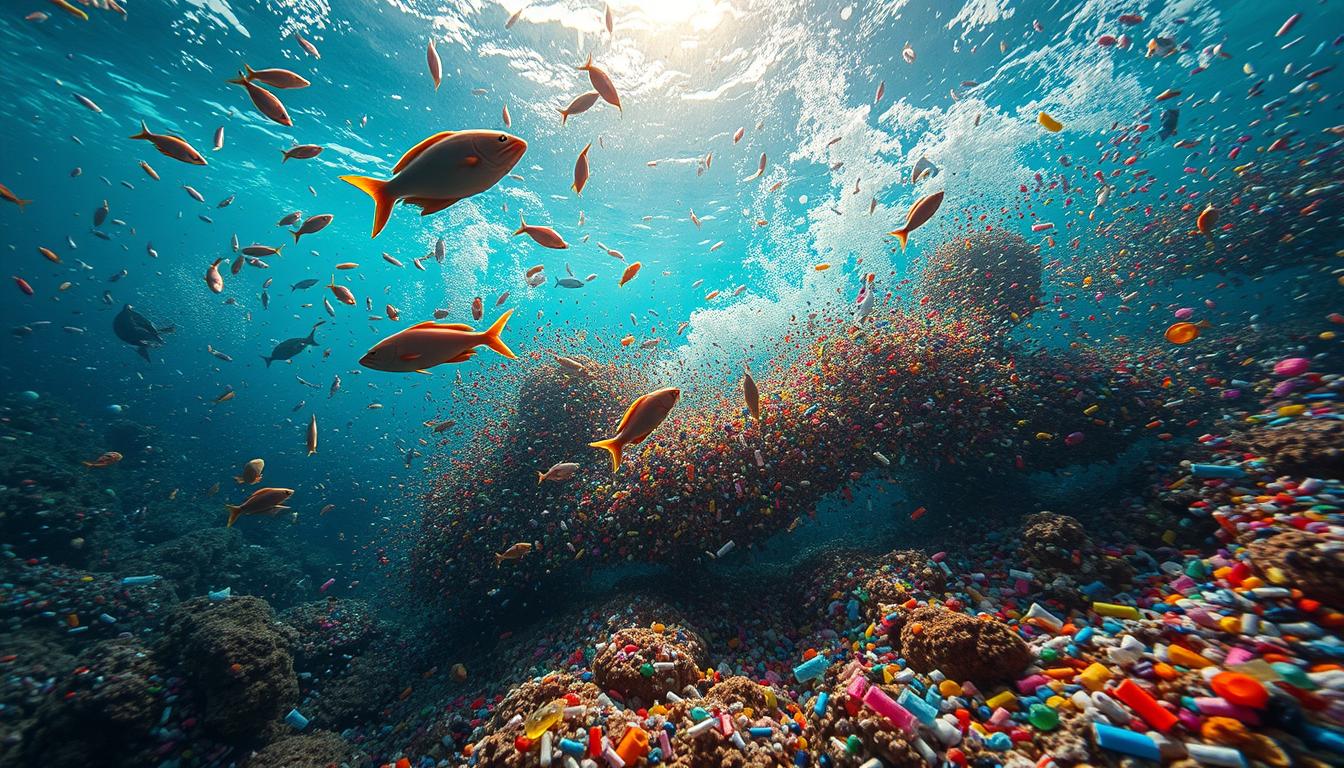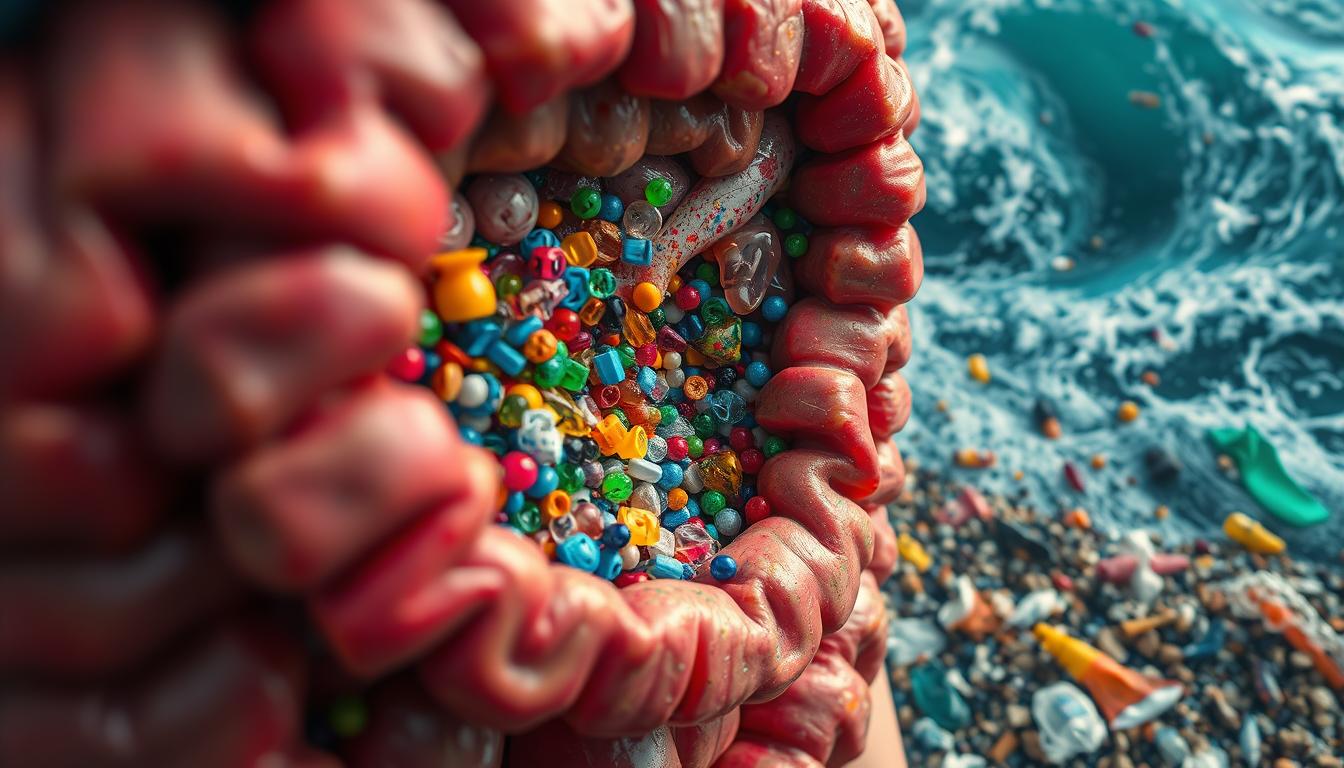
As you go about your daily life, you might not know about the microplastic bioaccumulation in humans happening inside you. This is due to the widespread microplastic pollution in our environment1. Microplastics have been found in the brain, testicular tissue, and even in the womb. This shows how deeply microplastics are present in our bodies.
Global plastic production has skyrocketed from 1.5 million tonnes to about 359 million tonnes in the last 70 years1. This huge increase has led to a lot of microplastic pollution. It affects how microplastics build up in humans.
People eat an average of 39,000 to 52,000 microplastic particles every year. This is based on studies that looked at microplastics in different foods2. Eating these particles can lead to serious health problems. These include cancer, intestinal diseases, pulmonary diseases, cardiovascular diseases, and inflammatory diseases1.
To lower your exposure to microplastics and reduce their health effects, try using tools like the Bye Microplastics AI mobile app. It helps you make better choices in your daily life. This way, you can help lessen your part in microplastic pollution.
Breaking Research Reveals Widespread Microplastic Bioaccumulation in Humans
Recent studies have found that microplastics are everywhere in our environment. They are in every type of environment and in thousands of species, including humans3. The health risks of microplastics are not fully understood yet. But, they might affect our immune and endocrine systems and increase the risk of heart disease.
Microplastics have been found in many places. This includes marine water, freshwater, agroecosystems, atmosphere, food, drinking water, and living organisms4.
Some key findings from recent research are:
- Microplastics have been found in autopsied bodies, with all examined livers, kidneys, and brains containing microplastics3.
- Brain samples have shown an average of 10 to 20 times more microplastics than other organs3.
- Microplastics serve as vectors for hazardous chemicals, consisting of both intrinsic additives and extrinsic chemicals absorbed from the environment4.
These findings show we need more research on the health effects of microplastics. As plastic production keeps growing, it’s vital to understand how microplastics affect us and the environment4.
| Study | Findings |
|---|---|
| Autopsied bodies | Microplastics found in all examined livers, kidneys, and brains3 |
| Brain samples | Average of 10 to 20 times more microplastics than other organs3 |
| Environmental samples | Microplastics detected in various environments, including marine water, freshwater, and atmosphere4 |
How Microplastics Enter Your Body
Microplastic ingestion is a big worry. It can happen in many ways. You might get exposed through the food and water you use every day5. For example, microplastics have been found in salt, bottled water, and even in fruits and veggies6.
Microplastics can also get into your body through breathing in them and touching products with microplastics. Studies show that microplastics can cause harm by causing stress and inflammation in animals5.
Here are some ways microplastics can get into your body:
- Eating contaminated food and water
- Breathing in airborne microplastics
- Touching products with microplastics
Knowing how microplastics get into your body is key. It helps us find ways to lower our exposure and protect our health6.
By understanding how microplastics can get into your body, you can take steps to reduce your exposure. This helps lower the risks of microplastic toxicity in humans5.
The Science Behind Microplastic Accumulation in Human Tissues
Microplastic buildup in human tissues is a big worry. Studies show that microplastics can get past the blood-brain barrier. This could harm our brains7. They also find microplastics in the liver, kidneys, and lungs, causing inflammation and damage.
Research is ongoing on how microplastics affect our cells. But we know they can settle in organs like the liver, kidneys, and lungs. Between 2016 and 2024, the amount of microplastics in these organs went up a lot7. This buildup can cause long-term inflammation and damage, showing why we need to understand microplastic buildup.
Some important findings on microplastic buildup include:
- Microplastics can get into the brain, possibly causing harm7.
- They are found in organs like the liver, kidneys, and lungs7.
- We eat about 39,000 to 52,000 microplastics a year, mostly from seafood8.
It’s key to understand the science behind microplastic buildup to know the health risks. More research is needed to fully grasp how microplastics affect us. But it’s clear that microplastic buildup is a serious issue that needs our attention and action7.
Your Daily Exposure to Microplastic Pollution
Microplastic pollution is everywhere, and human exposure to microplastics is a big worry. Simple actions like drinking from plastic bottles and using products with microbeads can expose us to microplastics9. Also, microplastics are in the air, our food, and water, so it’s key to know where they come from and how to cut down on them.
Some common places where microplastic pollution is found include:
- Plastic bottles and microbeads in personal care products
- Food and water, with average levels of microplastic pollution in food products such as seafood, sugar, and honey9
- Air, with an estimated 9.80 particles/m³9
It’s believed that we each eat about the size of a credit card’s worth of plastic every week10. This shows we need to be more aware and take steps to lower our daily exposure to microplastic pollution. By knowing where microplastic pollution comes from and how to reduce it, we can help make the world a healthier and more sustainable place.

Health Risks Associated with Microplastic Bioaccumulation in Humans
Microplastics in our bodies can lead to serious health issues. These include problems with our breathing and digestion11. They can also cause inflammation and oxidative stress11.
Some of the health risks from microplastic buildup are:
- Respiratory system effects, such as asthma-like reactions and inflammatory responses11
- Digestive system complications, such as altered gut microbiota and inflammation11
- Potential neurological impacts, including neurotoxic effects and altered brain development11
We need to know how microplastics affect our health to avoid these risks12. By reducing our exposure to microplastics, we can protect our health and well-being.
| Health Effect | Description |
|---|---|
| Respiratory System Effects | Asthma-like reactions and inflammatory responses |
| Digestive System Complications | Altered gut microbiota and inflammation |
| Potential Neurological Impacts | Neurotoxic effects and altered brain development |
Understanding Your Personal Microplastic Exposure Level
Figuring out how much microplastic you’re exposed to can be tough. But knowing where microplastic pollution comes from can help lower your risk. It’s worrying that microplastics can get into our bodies. Studies say we might swallow tens of thousands to millions of these tiny particles every year, adding up to several milligrams each day13.
To cut down on your exposure, it’s key to know where microplastic pollution comes from. These sources include:
- Inhalation of indoor air
- Ingestion of drinking water bottled in plastic
- Consumption of seafood and other foods contaminated with microplastics
Using fewer products with microplastics, filtering your drinking water, and supporting policies that reduce plastic use can help. These actions can lower your risk of microplastic presence in your body and help the environment.
Remember, long-term exposure to microplastics can harm your health. Knowing where these pollutants come from is the first step to reducing your exposure. By making smart choices and taking action, you can protect yourself and the planet for the future.
| Source of Microplastic Pollution | Estimated Annual Ingestion |
|---|---|
| Inhalation of indoor air | Thousands to millions of microplastic particles13 |
| Ingestion of drinking water bottled in plastic | Millions of microplastic particles14 |
| Consumption of seafood and other foods contaminated with microplastics | Thousands to millions of microplastic particles15 |
Revolutionary Technologies for Microplastic Detection
Technologies like AI and mobile apps are being created to find microplastics and track how much we’re exposed to16. The Bye Microplastics app is one example. It gives users tips on how to cut down their exposure to microplastics. Finding microplastics is key to understanding how much pollution we face.
Microplastic pollution is a big problem, with tons of plastic waste dumped into our environment every year17. AI and mobile apps help people make better choices. For example, some apps can find microplastics in water and suggest cleaner drinking water sources.
A table summarizing the impact of microplastics on the environment is as follows:
| Source | Impact |
|---|---|
| Plastic production | Contributes to microplastic pollution |
| Microplastic detection | Helps reduce exposure to microplastics |
Revolutionary technologies like AI and mobile apps are vital in finding microplastics and cutting down pollution18. They give people the info they need to make smart choices. This helps lessen the harm microplastics cause to our environment and health.
Taking Control of Your Microplastic Exposure Today
This final section empowers you to take control of your microplastic exposure. By making conscious choices about the products you use, the food you eat, and the water you drink, you can significantly reduce your microplastic intake19. Supporting policies that limit plastic use and increase recycling is also key to solving the microplastic pollution problem19.
Every small step you take can make a big difference. Avoiding single-use plastics, choosing products with minimal packaging, and buying from sustainable brands can lower your microplastic footprint20. Pushing for stricter plastic production and waste management rules can also lead to big changes21.
Though the challenge of microplastic pollution may seem daunting, your actions can help create a better future. Together, we can work to reduce microplastic exposure and protect both human health and the environment.
FAQ
What are microplastics and how are they found in humans?
How are microplastics distributed globally and how are they detected?
How do microplastics enter the human body?
What happens when microplastics accumulate in human tissues?
What are the common sources of daily microplastic exposure?
What are the possible health risks of microplastic bioaccumulation?
How can I assess my personal microplastic exposure level?
What technologies are available for detecting and tracking microplastics?
Source Links
- Microplastic sources, formation, toxicity and remediation: a review
- Microplastics: A Real Global Threat for Environment and Food Safety: A State of the Art Review
- Microplastics are infiltrating brain tissue, studies show: ‘There’s nowhere left untouched’
- A Detailed Review Study on Potential Effects of Microplastics and Additives of Concern on Human Health
- The potential effects of microplastics on human health: What is known and what is unknown
- The potential effects of microplastics on human health: What is known and what is unknown
- Bioaccumulation of Microplastics in Decedent Human Brains Assessed by Pyrolysis Gas Chromatography-Mass Spectrometry
- Microplastics and human health
- Impact of Microplastics and Nanoplastics on Human Health
- FoundMyFitness Topic – Microplastics
- Microplastics Everywhere
- Health Effects of Microplastic Exposures: Current Issues and Perspectives in South Korea
- A Review of Human Exposure to Microplastics and Insights Into Microplastics as Obesogens
- Microplastics, a Global Issue: Human Exposure through Environmental and Dietary Sources
- Microplastic sources, formation, toxicity and remediation: a review – Environmental Chemistry Letters
- Microplastics, a Global Issue: Human Exposure through Environmental and Dietary Sources
- Influence of Microplastics in Environmental Contamination and Human Health: An Analytical and Statistical Approach – International Journal of Research and Scientific Innovation (IJRSI)
- A Critical Review on Artificial Intelligence—Based Microplastics Imaging Technology: Recent Advances, Hot-Spots and Challenges
- Microplastics in Seafood and the Implications for Human Health
- From Fish to Humans, A Microplastic Invasion May Be Taking a Toll
- Field measurements reveal exposure risk to microplastic ingestion by filter-feeding megafauna – Nature Communications